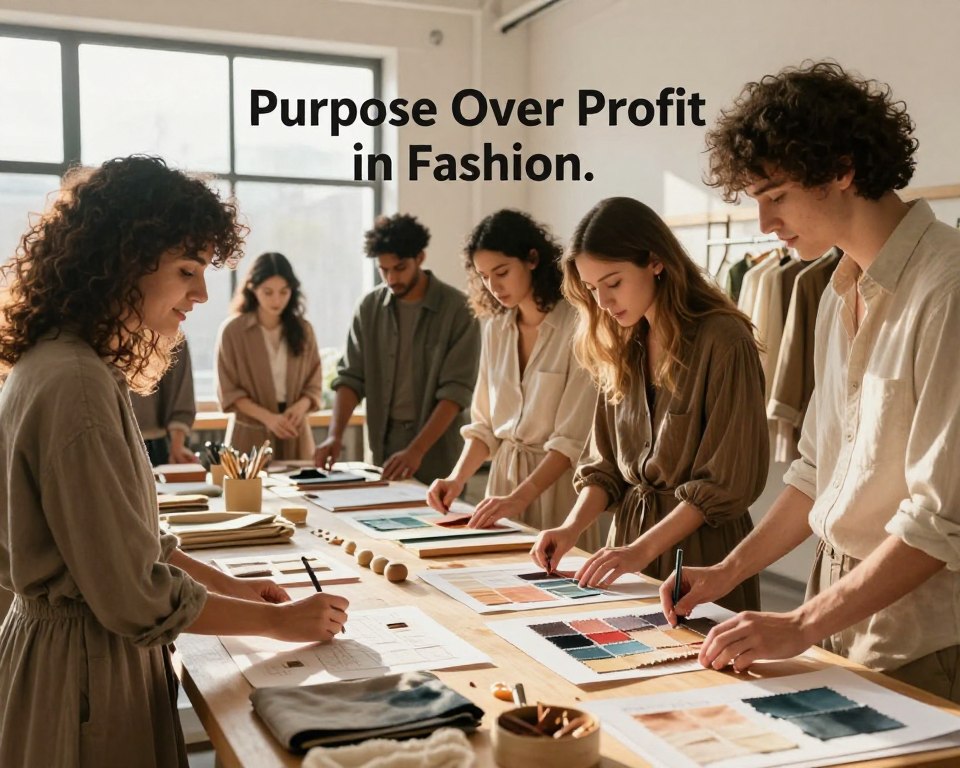
You are watching a big shift in how clothes are made and sold. Investors, shoppers, and tougher rules now push brands to act. A multiyear study cited by Forbes found leading sustainable companies earned about 50% higher annual profits than peers.
In this report you will learn what fair fashion means in practice: environmental responsibility, clear supply chains, and safer labor—not just green labels. You will see why fast fashion creates systemic waste and pollution.
This piece maps current trends and market forces. You will get a view of circular models scaling in the United States, material innovations likely to stick, and the signals to watch from brands.
By the end, you will have clear actions: questions to ask brands, metrics to follow, and examples of companies driving measurable impact. Read on to make smarter choices for your closet and your wallet.
Why fast fashion is accelerating waste, emissions, and pollution
Fast fashion’s speed hides a heavy toll: more items hit shelves faster, shoppers buy more, and garments stay in closets for shorter periods. Global consumption rose about 400% over two decades and you now buy roughly 60% more than in 2000 while keeping pieces half as long.
The scale of overproduction and disposal
Retail cycles push production up and turn clothing into near-disposable goods. About 85% of textiles end up in dumps each year. In the United States an average person tosses about 82 lbs of textile waste annually.
Climate impact in context
Fashion accounts for up to ~10% of global carbon emissions, and textile manufacturing emissions may rise ~60% by 2030. These projections show that small efficiency gains alone won’t stop growing emissions if production keeps expanding.
Water, dyeing, and microfiber pollution
Water intensity is real: one cotton shirt can use ~700 gallons; a pair of jeans ~2,000 gallons. Dyeing and finishing drive major pollution—Quantis found dyeing/finishing at 36%, yarn prep 28%, fiber production 15% of impact.
Washing synthetic garments releases about 500,000 tons of microfibers to oceans yearly. Roughly 35% of ocean microplastics link back to laundering textiles.
Fairness beyond the environment
High-speed, low-cost production concentrates labor risk. Around 80% of apparel work is done by women aged 18–24 in many supply chains. Investigations by the U.S. Department of Labor and disasters like Rana Plaza show why transparency and enforceable standards matter for workers.
- Hidden waste: losses occur at fiber, yarn, and cutting stages, not just post-consumer.
- System signal: the same speed driving harm can be used for better forecasting, longer-lasting design, and lower returns—if incentives change.
The Future of Fair Fashion: the forces reshaping the fashion industry right now
You now see two forces steering rapid change across the fashion industry: shopper expectations for responsible goods and investor demand for lower-risk, future-ready companies. Together they push sustainability from a nice-to-have into a business requirement.
Consumer expectations meet investor pressure
You reward firms that publish clear targets, pay attention to labor, and show real emissions cuts. Investors favor companies with credible plans because those firms attract talent, lower risk, and hold value better during shocks.
Price vs sustainability
Inflation tilts many buying choices toward lower cost. Nearly half of UK buyers and 67% of Germans put price over sustainability, and you may do the same when budgets tighten.
Transparency and greenwashing
Watch for vague claims: one-off “eco” lines, missing data, or inconsistent messaging are red flags. You should expect proof—audits, supplier lists, and verified metrics—not slogans.
Government and regulation signals
EU rules like CSRD and the circular textiles strategy force standardized reporting. That makes it easier to compare brands and harder for a company to hide high-impact practices—an important example of regulation driving change.
- Value-action gap: you may support sustainability but still choose price or convenience.
- Practical next step: when trust or cost blocks you, resale, repair, rental, and take-back services offer ways to act without paying a premium.
Circular fashion goes mainstream: resale, repair, rental, and take-back programs
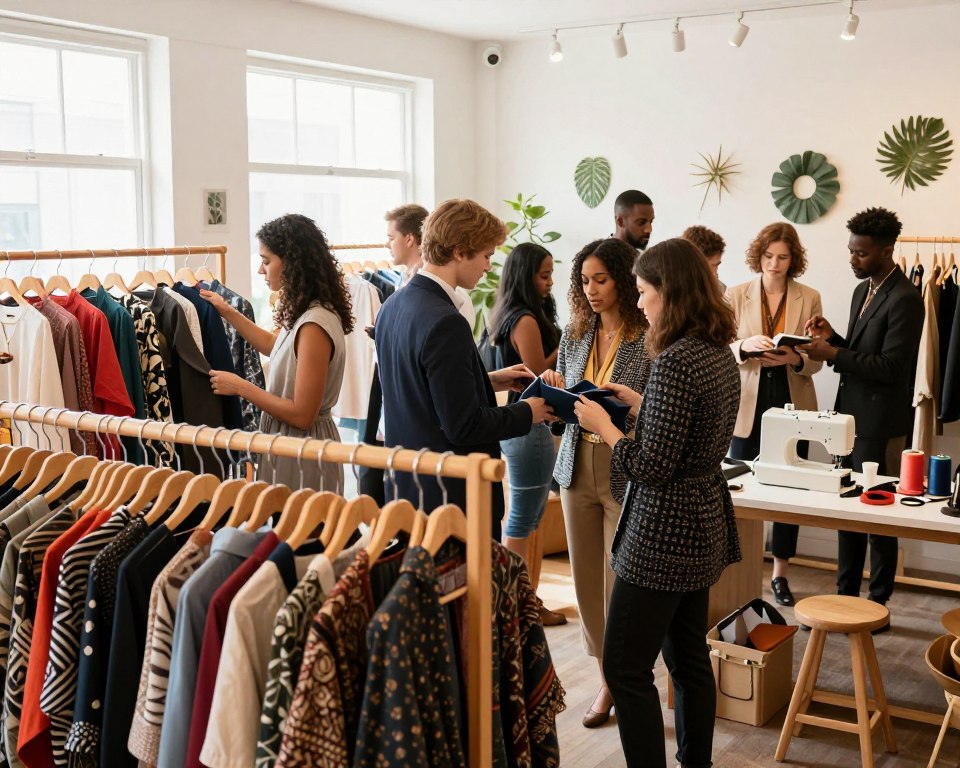
Resale, repair, and take-back services now shape how you keep and buy clothing. These options keep items in use longer through resale, repair, rental, and brand buyback so less ends up as waste.
Resale platforms and marketplaces
Resale marketplaces such as Vinted are surging because preloved goods match tighter budgets and lower-impact choices. Social mentions of “preloved” rose about 70% recently, and that momentum helps normalize second-hand as mainstream shopping.
Repair and remake in the United States
Retailers invest in repair services to extend product life. For example, Uniqlo offers repairs in select US stores, which helps you keep a favorite item longer and cuts returns and waste.
Brand-led resale and buyback loops
Some brands operate closed-loop programs: they buy back, grade condition, and resell products. Hessnatur’s model shows how buyback can retain value and reduce raw material demand.
Brick-and-mortar for circular services
Physical stores increase trust: you can touch, try, and inspect items. H&M’s pre-loved destination in New York signals that large retailers test circular formats at scale, not just as niche pilots.
Sorting and recycling at scale
Not every garment can be resold. Scaling circular systems needs better sorting and recycling tech. Projects like Autosort use optical scanning, robotics, and AI to route textiles to resale or recycling efficiently.
| Service | Example | Primary benefit |
|---|---|---|
| Resale marketplace | Vinted | Extends garment life and reduces textile waste |
| Repair service | Uniqlo (US stores) | Reduces returns and keeps products usable |
| Brand buyback | hessnatur | Turns used items into resellable inventory |
| Store-based pre-loved | H&M pre-loved store (NYC) | Builds trust and quality perception |
| Sorting tech | Autosort for Circular Textiles | Automates grading and routing to reduce oversupply |
Materials and manufacturing trends defining future fashion
Materials and how garments are made now lock in most environmental impact before you ever try them on.
Shifting away from virgin synthetics matters because fossil-based textiles persist as microplastics and long-lived waste. Brands scale recycled fibers as costs fall. Recycled polyester and reclaimed nylon cut demand for new fossil feedstocks and lower lifetime emissions.
Lower-impact natural and bio-based options
You can choose organic cotton, hemp, linen, and lyocell in many styles. These materials often need less chemical input and can reduce freshwater withdrawal versus conventional cotton.
Supply chain hotspots and priority fixes
Quantis data shows where interventions yield the biggest gains: dyeing/finishing ~36%, yarn prep ~28%, fiber production ~15%.
That points to water and energy as twin targets—cotton pulls heavy water; processing burns energy. Look for brands that disclose lower-impact dyeing and supply footprints.
Designing for longevity
Durable construction, repair programs, and recycled-content labels cut waste. AI forecasting can lower unsold stock and reduce returns—an example of a tech solution helping production match demand.
| Focus | Example | Primary gain |
|---|---|---|
| Recycled fibers | Recycled polyester | Reduces virgin feedstock use |
| Bio-based fibers | Seaweed fiber (Aimer) | Performance plus lower impact |
| Processing hotspot | Dyeing/finishing | 36% of impact; lower water & energy |
| Demand tools | AI forecasting (H&M) | Fewer returns, less overproduction |
What to watch: recycled content disclosures, evidence-backed dye claims, clear repair or take-back programs, and smart design cues in product pages. For context on circular change, see circular and sustainable trends.
Brands and case studies to watch in sustainable fashion
Practical case studies reveal which brands turn sustainability claims into real results.
Stella McCartney
Cruelty-free design means no leather, feathers, or skins and a move to organic cotton and regenerated cashmere. Removing PVC and shifting materials shows supply chain choices, not just marketing.
Patagonia
Patagonia builds durability-first gear to fight fast fashion. Fewer replacements cut carbon and extend product life.
Adidas
Adidas scales recycled materials and works with Parley Ocean Plastics. That approach reduces virgin polyester and shifts market demand for lower-impact materials.
Levi’s
Levi’s embeds climate, consumption, and community into its core pillars so sustainability guides product and policy across the company.
Trashie & Mud Jeans
Trashie sorts 250+ categories: ~70% items reused, ~20% recycled into new fibers, and 90%+ diverted from landfill/ocean.
Mud Jeans reports saved 48.7M liters of water, avoided 250k+ kilos of CO2, and diverted 18,000+ pairs from landfill—quantified wins you can compare.
| Brand | Action | Operational outcome | Why you should care |
|---|---|---|---|
| Stella McCartney | No animal skins; organic/regenerated materials | Reduced harmful inputs | Signals deep supply change beyond labels |
| Patagonia | Durability-first design | Fewer replacements; lower lifetime carbon | Opposes disposable fast fashion |
| Adidas | Scale recycled polyester; Parley partnership | Millions of items made from ocean plastics | Shifts materials market at volume |
| Trashie / Mud Jeans | Take-back, deep sorting, circular denim | High diversion rates; water and CO2 savings | Shows measurable reuse vs recycling impact |
How to use this: prioritize brands offering durability, verified material shifts, take-back loops, and clear reporting over vague eco collections.
Conclusion
Small acts—repairing a hem, buying preloved—add up to big reductions in resource use.
Core finding: circular models, better materials, and stronger accountability cut waste and lower impact across the fashion industry.
For you, that means buy less, buy better, verify claims, and choose resale, repair, or take-back first when budget limits choices.
Use a simple rule: strong, simple rule: keep items longer, fix small damage early, and launder gently to curb microfibers.
To spot real environmentally friendly claims, look for reporting, recycled content figures, take-back outcomes, and certifications rather than vague labels.
Example action: resell on a marketplace, book a brand repair, or send worn pieces to a take-back program instead of trashing them.
As consumers push for change, brands that cut waste and show measurable impact will set the market direction.